Storage in the bedroom and the tip-over rule
A federal rule decides which bedroom furniture has to stay upright when a drawer is pulled out. It covers less than people assume and matters more than they think.
What the federal rule covers and what it does not
The federal tip-over rule addresses a specific category of furniture called a clothing storage unit. It is not a general rule for every item placed in a bedroom. The category focuses on free-standing furniture intended to hold clothing, with particular requirements for size, weight, enclosed storage volume, and drawers.
The U.S. Consumer Product Safety Commission, in its Clothing Storage Units guidance, describes the law as “Enacted in 2022, the STURDY law”. The U.S. Consumer Product Safety Commission also states in Clothing Storage Units, “The requirements are codified at 16 CFR part 1261 and apply to clothing storage units manufactured after September 1, 2023.”
That scope matters when comparing bedroom furniture. A dresser may fall within the rule because it is a free-standing unit intended for clothing storage and meets the required thresholds. A small table beside a bed may not. A bed frame is not automatically covered because it is in a bedroom or has space beneath the mattress.
The rule does not mean every piece of furniture is safe to leave unsecured. It identifies a particular group of products that must meet federal stability requirements. Furniture outside that group can still tip if it is overloaded, placed on an uneven surface, pulled by a child, or used in a way the design does not support.
The rule also does not tell you how to arrange an entire bedroom. It does not replace product instructions. It does not make one wall anchor suitable for every wall type. It does not allow you to ignore stated weight limits, drawer guidance, or assembly steps for a particular piece.
We view the rule as one part of a careful buying decision. Start by identifying what the furniture is designed to store. Then review its dimensions, enclosed storage, drawers, weight, and instructions. A piece outside the federal definition still deserves sensible placement and use.
Our range includes 46 bed frames and bedside pieces across five departments: King, Queen, Full, Twin, and Nightstands. Prices range from $69.99 to $184.99. Some pieces include storage, while others do not. Storage appears on 38 pieces in the catalogue, but that figure alone does not determine whether a product is a clothing storage unit under federal rules.
The same applies to other features. A built-in charging station or LED lighting does not decide the legal category. A headboard does not decide it either. These features may affect how you use a piece, but the scope question centers on the furniture’s intended storage function and the specific criteria described below.
The exact scope criteria and why a nightstand may or may not be covered
A clothing storage unit must meet the relevant conditions together. The first question is intended use. The item must be a free-standing furniture piece intended for storing clothing. It must then meet the height, weight, enclosed-volume, and drawer requirements.
The U.S. Consumer Product Safety Commission, in Clothing Storage Units, gives the height threshold as “Height of at least 27 inches”. The same page gives the weight threshold as “Mass of at least 30 pounds”, at least 3.2 cubic feet of enclosed storage volume, and one or more drawers.
| Scope criterion | What it means in practical terms |
|---|---|
| Intended for clothing storage | The furniture is designed or intended to hold clothing, rather than serving only as a display surface, desk, bed, or open shelf. |
| Free-standing furniture | The unit stands as its own piece of furniture. It is not simply a built-in part of another structure. |
| Height of at least 27 inches | The unit reaches the federal height threshold. |
| Weight of at least 30 pounds | The unit meets the minimum weight threshold used for the rule. |
| Enclosed storage volume of at least 3.2 cubic feet | The unit has at least the required amount of enclosed storage space. |
| One or more drawers | The piece includes at least one drawer as part of its storage design. |
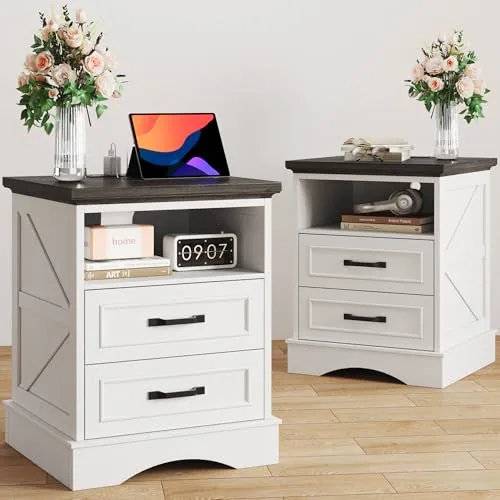
A nightstand can sit near the boundary without being easy to classify from its name alone. “Nightstand” describes how a piece is commonly used, not every detail that determines its scope. One nightstand may be a compact bedside table with an open shelf and no drawer. Another may be a taller cabinet with a drawer and an enclosed compartment. Their intended uses and physical features can differ.
A nightstand is less likely to meet the clothing-storage definition when it is designed mainly for a lamp, book, phone, alarm clock, or other bedside items. A drawer for small personal belongings does not automatically make the whole piece a clothing storage unit. The full set of criteria still matters.
A nightstand may need closer review if it is free-standing, at least 27 inches high, at least 30 pounds, has at least 3.2 cubic feet of enclosed storage, and includes a drawer. Its intended storage use also matters. If the product information describes it as furniture for clothing storage, that points in a different direction from a compact bedside table intended for personal items.
We do not treat the word “storage” as an automatic legal conclusion. Our catalogue count says that 38 of our 46 bed frames and bedside pieces include storage. That count describes a catalogue feature. It does not tell you that all 38 are clothing storage units, and it does not tell you that the remaining pieces have no surfaces or compartments.
The same care applies to dimensions and weight. Weight capacity is given for 16 pieces in our range, with the highest stated figure at 1,000 lb. A product’s weight capacity is not the same as the product’s own weight. It is not a substitute for the 30-pound scope threshold. Read those figures as separate information.
If you are deciding between a nightstand and a chest, consider the purpose of the storage first. A nightstand generally serves the area beside the bed. A chest or dresser is generally selected to hold clothing. From there, compare the physical criteria and the product instructions. If the information does not make the classification clear, avoid assuming that the piece is covered or exempt.
Why a bed frame is not a clothing storage unit and what that means for the buyer
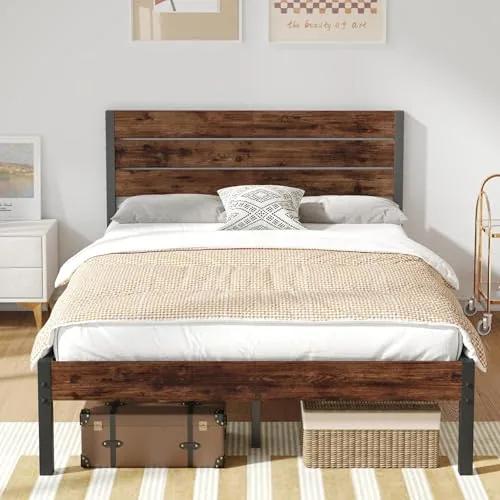
A bed frame has a different primary job from a dresser. It supports the mattress and creates the base of the bed. Some designs also include a headboard, bedside features, lighting, charging, or storage. Those additions do not change the central distinction by themselves.
A bed frame is not automatically a clothing storage unit because it is tall, heavy, or used in a bedroom. The federal definition focuses on a free-standing piece intended for clothing storage and then applies the specific thresholds. A bed frame can have storage while still being designed primarily as a bed.
This distinction helps prevent two opposite mistakes. The first is assuming that every bed frame with storage must meet the same federal requirements as a dresser. The second is assuming that storage beneath a bed never needs careful attention. Neither shortcut is useful.
Our catalogue includes 46 bed frames and bedside pieces. Forty-three have a headboard. Thirty-eight include storage. Twenty-eight have a built-in charging station, and 28 have LED lighting. These features help you compare designs, but they do not answer the clothing-storage question on their own.
The same is true of construction. Thirty-four pieces in the range are all-metal frames, and 26 are upholstered. These are catalogue characteristics, not conclusions about tip-over performance or legal scope. A metal frame still needs to be assembled as instructed. An upholstered frame still needs appropriate placement and use.
For us, the practical question is what you want the storage to do. Under-bed compartments can hold spare bedding, seasonal items, shoes, or clothing, depending on the product design and your own arrangement. Storage accessed from the side may suit a room with limited clearance at the foot of the bed. A lift-up design may require open space above the mattress. Product information should guide that choice.
Do not use the stated mattress or user weight capacity as a storage-volume measurement. Our catalogue states weight capacity for 16 pieces, with the highest stated figure at 1,000 lb. That figure concerns the stated capacity of the product. It does not identify a piece as a clothing storage unit, and it does not mean every storage compartment can hold that amount.
Storage can also affect daily use. Heavy items placed high on a separate cabinet can make the cabinet harder to use safely. Items packed tightly under a bed can make drawers difficult to open. Objects extending beyond a compartment can interfere with movement around the bed. Consider access, clearance, and the location of heavier items before choosing a design.
If a bed frame includes a separate bedside piece, assess the two items separately. The bed frame may be a support structure with optional storage. The nightstand may have its own drawer, cabinet, or shelf. Their functions, dimensions, and instructions may not be the same.
Anchoring: what it is, when it matters most, and what is in the box
Anchoring connects a furniture piece to a wall or another suitable fixed point so the piece is less likely to tip. It is a physical restraint, not a replacement for correct assembly. It also does not make every placement safe. The anchor, fastener, wall material, and installation method must suit both the furniture and the wall.
Anchoring matters most for tall or top-heavy pieces, furniture with drawers, and pieces that may be pulled or climbed on. It deserves particular attention in rooms used by children. Open drawers can change how weight is distributed. A child pulling on a drawer can place force on the front of the unit. Items stored near the top can add leverage.
The federal rule focuses on covered clothing storage units, but good furniture practice extends beyond that category. A smaller cabinet or nightstand can still move if it is overloaded or used as a step. A bed frame with storage can still need careful assembly and placement. Legal scope does not remove the need for sensible household precautions.
The contents of the box are product-specific. We do not make a universal claim that every FLUEST piece includes an anchoring kit, wall straps, screws, brackets, or a particular fastener. Check the product information and assembly materials for the exact piece you are considering. If anchoring hardware is included, use only the parts and directions intended for that product.
Wall construction varies. A fastener that works for one wall type may not suit another. Drywall, wood framing, masonry, and other surfaces can require different approaches. If the instructions call for attachment to a stud or another fixed structure, identify that structure before installation. Do not rely on a loose surface layer when the directions require a stronger connection.
The furniture must also sit correctly before anchoring. Assemble every component fully. Confirm that feet or supports are in position. Place the unit on a firm, level surface where possible. Keep drawers closed when they are not in use. Do not place heavy objects where they can shift or pull the unit forward.
Anchoring is not a reason to exceed a product’s capacity. If the stated capacity is 1,000 lb, that does not mean the unit should be filled without regard to how weight is distributed. If a product has no stated capacity in the catalogue information, do not invent one. Use the available product instructions and avoid loading it beyond what is stated.
For bedroom planning, consider access to the wall before choosing the furniture location. A tall piece may need to sit close enough to a suitable wall for the restraint to work. A bed, radiator, window trim, or other obstruction can affect where an anchor can be installed. Measure the area and think through the completed setup, not only the furniture’s footprint.
Keep the anchoring information with the assembly instructions. If you move the furniture, inspect the connection again. If you change the wall location, reinstall the restraint for the new surface rather than assuming the old arrangement will transfer. If the furniture is disassembled, treat anchoring as part of the new installation.
Our role is to give you the product facts we have. Installation decisions depend on the specific unit, the wall, and the home. When the instructions call for a particular attachment method, follow them carefully. When the product information does not state that hardware is included, review the box contents before beginning assembly.
Drawers under a bed as an alternative to a chest
Under-bed storage can be an alternative to adding a separate chest to the room. It uses space that would otherwise remain open and can help when the room does not have enough wall space for another tall piece.
The right choice depends on what you need to store and how often you need to reach it. Under-bed compartments can suit spare linens, off-season clothing, shoes, or other bedroom items. A chest may provide easier access for clothing used every day. A nightstand may be more convenient for small personal items beside the bed.
A drawer under a bed is not automatically the same thing as a drawer in a dresser. The bed’s main function is still to support the sleeping surface. The presence of under-bed storage does not by itself decide whether the completed product falls within the federal clothing-storage definition. Consider the intended use and all of the scope criteria together.
Access is an important part of the comparison. Measure the clearance on each side of the bed. Check whether a drawer needs room to open fully. Account for a nightstand, wall, rug, or other furniture that could block the path. A storage feature is less useful if the room layout prevents you from opening it.
Think about the weight and shape of the contents. Clothing can be packed tightly, but overfilling can make a drawer difficult to move and can place stress on its hardware. Keep contents within the product’s stated guidance. If no specific storage capacity is given, avoid treating the compartment as unlimited.
A bed with storage can reduce the need for a tall unit. That may simplify the room layout, especially in a smaller bedroom. It does not eliminate the need to assemble the bed correctly. Supports, slats, rails, drawers, and other components must be installed as directed. A drawer that is not seated properly can affect use even when the frame itself is assembled.
Our range gives you several ways to compare bedroom furniture. We have King, Queen, Full, Twin, and Nightstands departments. Storage appears on 38 of the 46 bed frames and bedside pieces in the catalogue. The range also includes all-metal and upholstered frames, with colors including black, grey, beige, white, retro brown, rustic grey, and antique white.
These catalogue facts help narrow the style and size of your search. They do not tell you how much a particular compartment holds or what it is intended to store. Review the individual product details before relying on storage for a specific purpose.
Choose a chest when you need a dedicated clothing-storage piece with drawers at a convenient height. Choose under-bed storage when low, concealed space fits your room and routine. Some bedrooms can use both. The federal rule is one consideration, while access, clearance, assembly, and everyday use also matter.
A short checklist for a child’s room
Use this checklist when choosing and arranging furniture for a child’s bedroom:
- Identify the furniture’s main purpose. A dresser or chest intended for clothing needs closer review than a simple bedside surface.
- Check whether a clothing-storage piece reaches the scope thresholds: at least 27 inches high, at least 30 pounds, at least 3.2 cubic feet of enclosed storage, and one or more drawers.
- Read the product-specific assembly and safety information before starting.
- Confirm what is in the box. Do not assume that anchoring hardware is included.
- Assemble the piece fully before use. Recheck drawers, supports, feet, and other connected parts.
- Anchor covered clothing storage units as instructed. Consider anchoring other furniture that a child could pull, climb, or lean against.
- Match the attachment method to the wall and the fixed structure behind it.
- Keep heavier items low when the product design allows it.
- Close drawers after use. Do not let a child climb, sit, or stand on them.
- Keep tempting objects off the top of furniture and away from drawer fronts.
- Leave enough clearance for under-bed drawers and other moving parts to open safely.
- Check the room again after moving furniture, changing the layout, or reinstalling an anchor.
- Use the stated weight capacity when one is provided. Do not treat a capacity figure as permission to overload a storage compartment.
- If a fact is not stated for the product, do not guess. Review the available instructions before making the piece part of the room.
A careful setup begins before checkout. Compare the furniture’s purpose, storage design, dimensions, and instructions with the room where it will be used. Our catalogue gives you a starting point across bed frames and bedside pieces. The final choice should fit the child, the space, and the way the furniture will be used every day.
Sources
- Clothing Storage Units, U.S. Consumer Product Safety Commission. Read 14 August 2026. The STURDY law and 16 CFR part 1261: which storage furniture falls under the federal stability requirements.
Nothing on this page is medical advice. Where a public authority is quoted, the quotation is word for word and the link goes to the page we read.